
BB - CED -BOU - VV - 2023
2023
750ml
12,5%
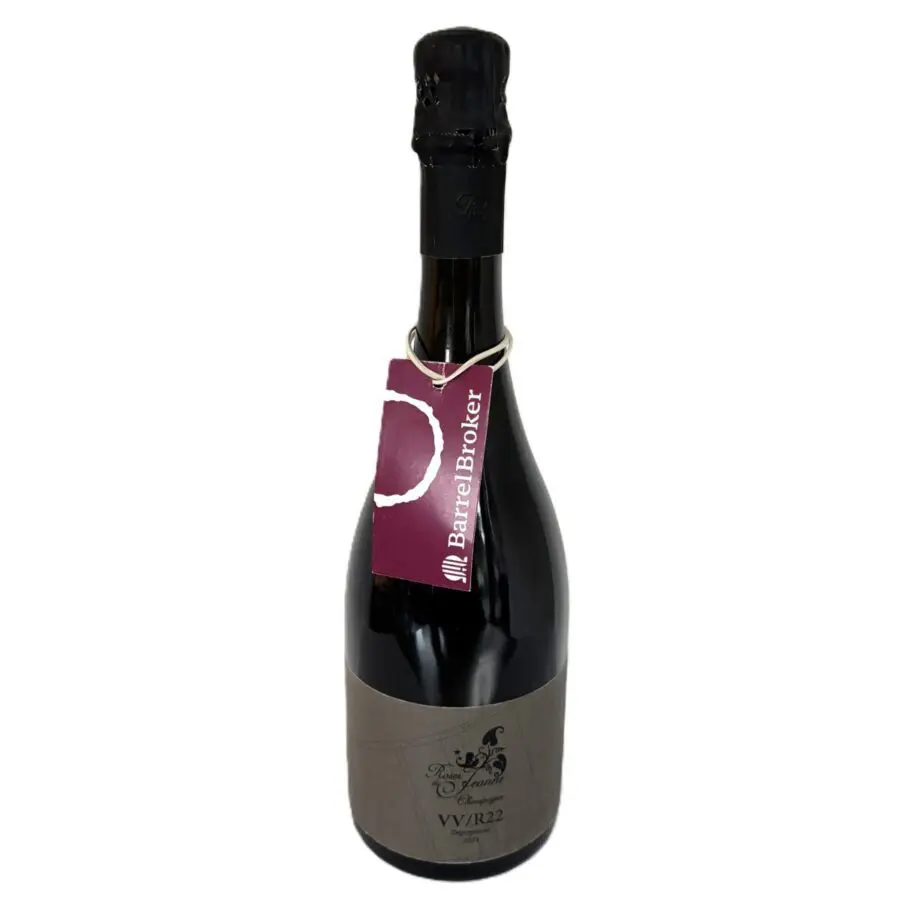
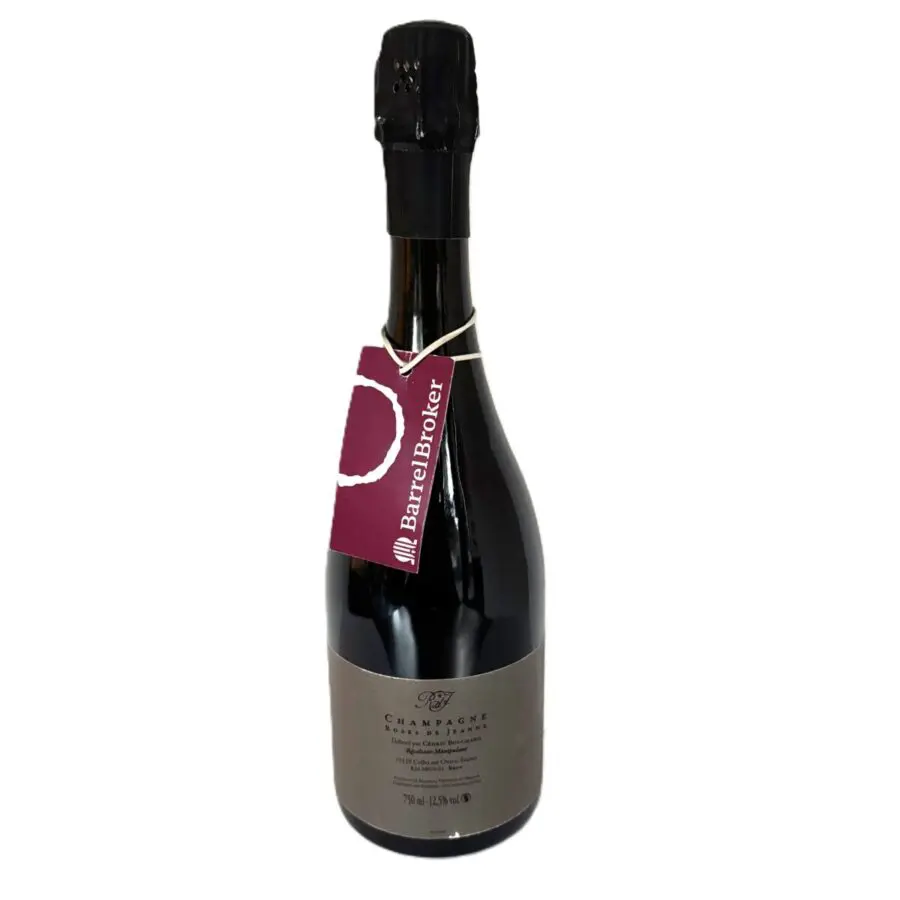
CEDRIC BOUCHARD Roses de Jeanne ‘VV-Cote de Val Vilaine’ 2023
Category: Sparkling wine from Champagne
Chateau: Roses de Jeanne (Cedric Bouchard)
Extra information: Loose bottle
Region/Appellation: Champagne
Country hierarchy: Champagne
Good investment: Yes
Robert Parker rating: NA
0% VAT: Duty paid bottle (margin scheme)
All our bottles are stored elsewhere in a specialized and conditioned warehouse to guarantee the quality of our products.
This item is sold by a private collector through the BarrelBroker Marketplace. Price excludes VAT.
Availability: 2 in stock
in Vat: - 259.00€
ex Vat: - 259.00€
Availability: 2 in stock
Ask ShopAssist
Among the smallest estates in Champagne—and simultaneously one of the most discussed—Roses de Jeanne is helmed by the affable yet intensely introspective Cédric Bouchard. Through hard work since 2000, when he and his wife, Émilie, harvested their first fruit, the domaine has vaulted into the ranks of France’s greatest, producing some of the most singular wines not only in the Côte des Bar but across the entire Champagne region.
With the winery located in Celles-sur-Ource and the library cellars situated in Landreville, beneath their restored 300-year-old home, my visit there was among my most anticipated of the year. My colleague William Kelley has written extensively about Bouchard, yet several recent developments warrant renewed attention in this updated profile, which combines his earlier research with mine.
Today, working just 3.5 hectares and some of the lowest yields in Champagne, Bouchard produces some of the region’s most compelling wines from vineyards that were once entirely obscure—through methods that remain resolutely uncompromising.
A quarter-century ago, few could have imagined that a diminutive estate in the Côte des Bar—working vineyards unclassified as grand or even premier cru—could achieve such international recognition. “After 26 harvests, each feels like the first; the more time passes, the more daunting it becomes,” Bouchard reflects—a sentiment characteristic of a perfectionist. Though he avoids industry events and does not use social media, his wines speak for themselves.
Bouchard began his tiny domaine with less than a hectare of Pinot Noir vines in the lieu-dit Les Ursules, gifted by his father. The 2000 vintage was Bouchard’s first, and from the beginning, his approach has challenged almost all the precepts of conventional Champagne. In a region dominated by blends, each of his wines is produced from a single vineyard, single grape variety and single vintage.
While most Champenois harvest grapes at the threshold of ripeness, Bouchard picks physiologically mature grapes, refrains from chaptalization and adds no dosage. His yields—averaging some 26 hectoliters per hectare—would be considered low even in Burgundy. He even questions Champagne’s defining feature: its bubbles, bottling at 3.5 to 4 atmospheres of pressure instead of the standard six.
Farming organically, though without formal certification, Bouchard works the soils and debuds hard. The day-to-day operation involves merely five people—himself and Émilie included—yet during harvest, some 40 pickers join the team in an atmosphere that is, as he puts it, “almost military.” “Harvest time,” he jokes, “feels like risking my life every year.” Given his minuscule yields, grapes ripen quickly; his 0.11-hectare parcel in La Haute Lemblé is harvested in under an hour, and the entire estate is typically picked within three to five days over an eight-day window. Bouchard is resolute on leaving any imperfect grapes on the vine.
At the winery, only the first pressing is retained and fermented in stainless steel, which Bouchard believes best expresses the purity of his sites. Intervention is minimal: gravity transfers the juice, and fermentation relies on ambient microflora. Malolactic fermentation always takes place, except for one partial anomaly in 2009’s La Bolorée. There is no fining or filtration, and sulfur use is minimal.
Below are all lieux-dits, reflecting latest developments:
• Blanc de Noirs Côte de Val Vilaine originates from a 1.41-hectare, south-facing parcel planted with Pinot Noir in 1974. The domaine’s largest cuvée, it produces around 5,000 bottles in favorable years and is released earlier than others. Approachable young—and therefore often consumed too early—it is capable of long evolution, typically stepping into peak enjoyment window some six years post-harvest.
• Blanc de Noirs Côte de Béchalin, from a southwest-facing site planted with Pinot Noir in 1981 atop the slope in Celles-sur-Ource, tends to produce a slightly richer, more muscular wine, in context of his other Blanc de Noirs. Following a vineyard exchange that expanded his holdings in the lieu-dit Le Creux d’Enfer, the 2014 vintage marks the final rendition of Côte de Béchalin.
• Blanc de Noirs Le Creux d’Enfer, first produced in 2021 after an exchange of vines with his cousin, comes from a west-facing 0.9-hectare parcel planted with massal selections of Pinot Noir in 1981. Sheltered by nearby forest, it produces wine uniting elegance and charm, somewhat less incisive than Les Ursules. It should not be confused with Bouchard’s minute, historic plot within the same lieu-dit, reserved exclusively for the Rosé de Saignée.
• Blanc de Noirs Les Ursules, a 0.97-hectare north-facing parcel planted in 1974 to Pinot Noir, was the site of Bouchard’s first vintage in 2000. Naturally cooler, given its exposure, it yields a taut, incisive wine that nonetheless avoids tipping into austerity.
• Blanc de Noirs Presle, derived from a west-facing 0.25-hectare site planted in 2007 with 10 massal selections of Pinot Noir, concluded its existence with the 2020 vintage, following Bouchard’s decision to exchange those vines for additional land in lieu-dit La Bolorée.
• Blanc de Blancs La Haute Lemblé, planted in 2002 with five massal selections of Chardonnay by Cédric Bouchard and his wife Émilie themselves, derives from a 0.11-hectare, south-facing plot producing a uniquely expressive Chardonnay—unlike any Blanc de Blancs from the Côte des Blancs.
• The Blanc de Blancs La Bolorée, from old-vine Pinot Blanc planted in 1960 on a south-facing parcel, has evolved into one of Bouchard’s signature wines. Initially acquired without expectations, Bouchard sought to test the very limits of what Pinot Blanc could express and, in doing so, transformed not only his own perception of the variety but that of anyone fortunate enough to taste it. In 2023, he succeeded in reuniting the entire 0.63-hectare historic site, restoring it to its original form prior to its 2004 subdivision among three owners of 0.21 hectares each.
• Rosé de Saignée Le Creux d’Enfer, from an infinitesimal 0.032-hectare plot (three rows of vines), produces no more than 200 bottles and isn’t produced every year. The grapes are foot-crushed, macerated for 36 hours and then the free run juice ferments in stainless steel tank, maturing on the lees until bottling. When conditions align, it stands among the most singular wines in his portfolio, and, in fact, all of Champagne.
• One of Bouchard’s most thought-provoking bottlings is simply labeled RDJ. For this cuvée, he discloses neither grape, origin, nor vintage—it is simply his favorite wine in the cellar at that moment, which he wants his clients to taste with the absence of expectations. I have encouraged Bouchard to disclose the origins of his RDJ bottlings five or 10 years following release. Such retrospective revelation would offer a fascinating opportunity for anyone to revisit their earlier tasting notes and compare them against the revealed provenance of wines first encountered in deliberate anonymity. RDJ encapsulates Bouchard’s creative freedom—he is not merely producing wines his own way but realizing them in a manner entirely his own.
At Bouchard, there are virtually no late disgorgements—“virtually” because he retains only a minuscule volume for comparative purposes and, upon tasting, he consistently finds himself less impressed by the late-disgorged examples, which he feels “restart the life of the wine” rather than reveal its natural evolution. Every cuvée is therefore disgorged in its entirety at once. The library releases, labeled and distinguished by the letters O.P. (for Œnothèque Personnelle), represent a relatively recent initiative; they are precisely the same wines as those originally released, merely held longer in his cellars and reissued at their full plenitude. Motivated by a desire to demonstrate how gracefully—and without any oxidative aromatic signatures—his wines can evolve over time, Bouchard is currently expanding his cellars in Landreville. The goal is to reserve small quantities from each vintage for this purpose, while also providing a modest counterbalance in more challenging years by releasing slightly larger volumes of his back vintages.
Vinous and textural, with a sweet core of fruit, Bouchard’s wines exhibit remarkable harmony—equally expressive after some time in the glass at room temperature as when freshly opened. Despite the absence of dosage—simultaneously acknowledging that they often retain a trace of residual sugar—they never veer into austerity, and yet there is invariably plenty of chalky grip on the finish. While undeniably characterful young, these wines typically attain their apogee five to 10 years post-disgorgement—depending on one’s personal taste—when they deepen in complexity and texture. In a sense, they evolve much like still wines, without the overtly toasty and nutty notes that so often define the aromatic profile of mature Champagne.
Be the first to review “CEDRIC BOUCHARD Roses de Jeanne ‘VV-Cote de Val Vilaine’ 2023” Cancel reply


Reviews
There are no reviews yet.