
BB - 1022
2015
750ml
12,5%
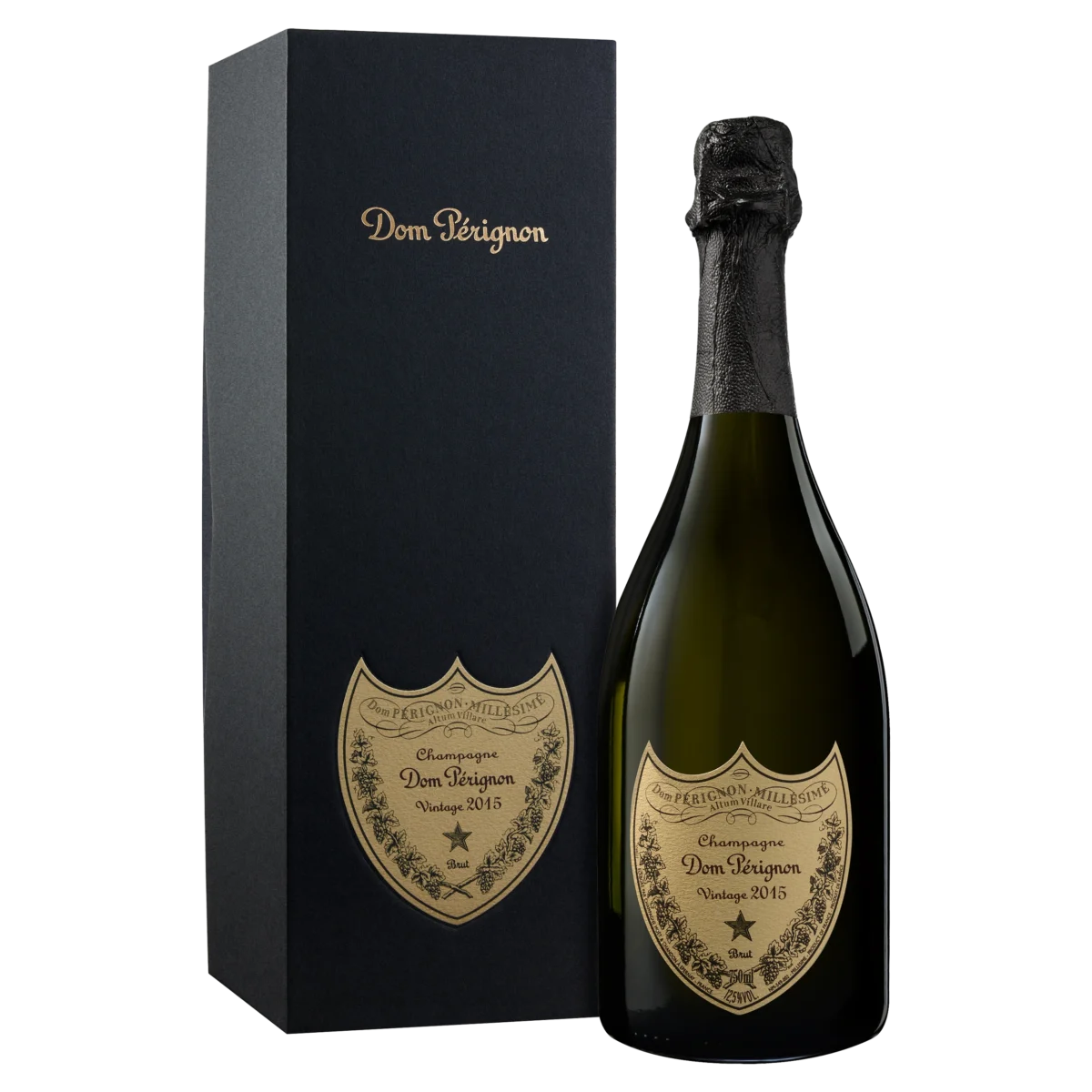
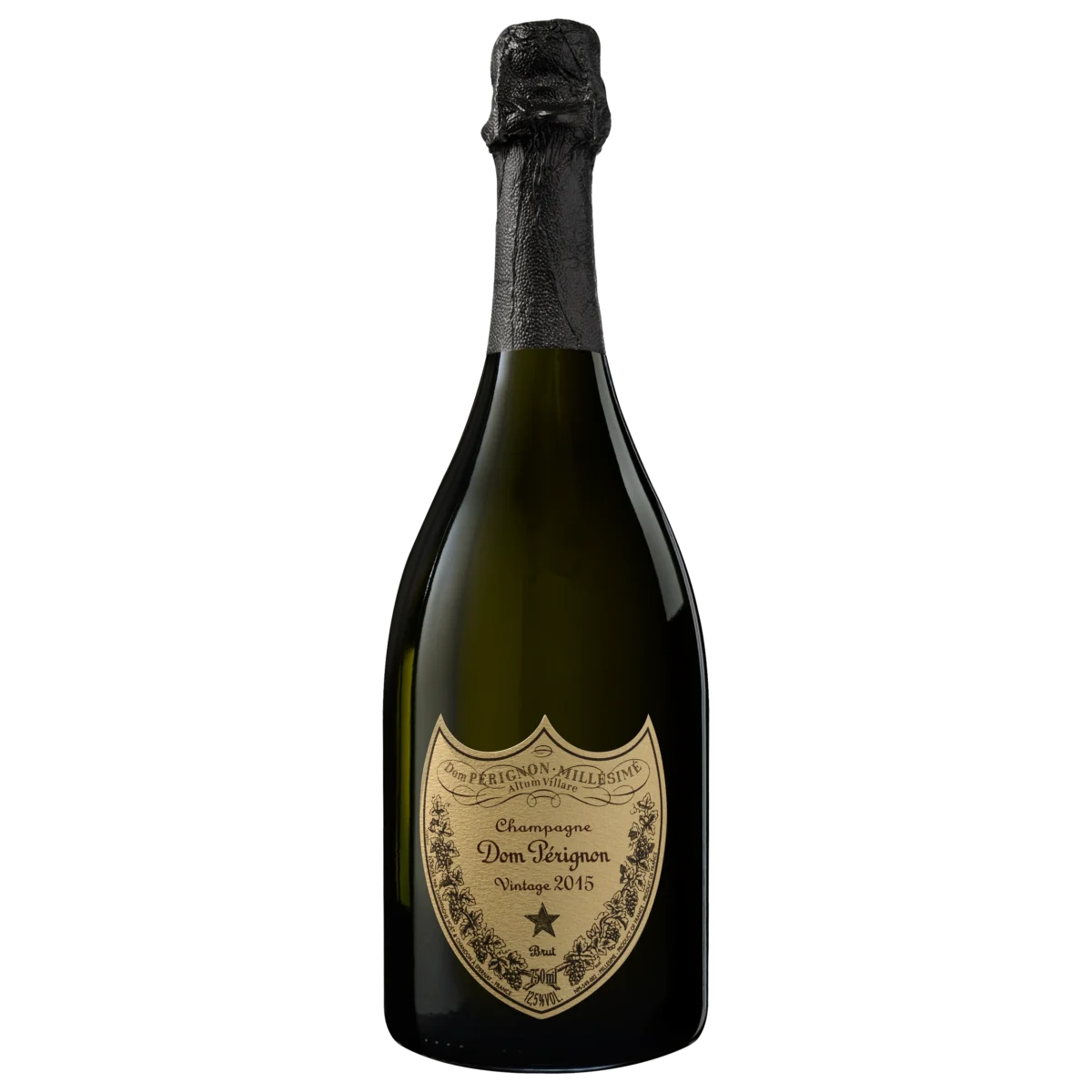
DOM PERIGNON 2015
Category: Sparkling wine from Champagne
Chateau: Dom Perignon
Extra information: OC1. Original case with one bottle.
Region/Appellation: Champagne
Country hierarchy: Champagne
Good investment: Yes
Robert Parker rating: 95/100
All our bottles are stored elsewhere in a specialized and conditioned warehouse to guarantee the quality of our products.
Availability: 12 in stock
in Vat: - 264.99€
ex Vat: - 219.00€
Availability: 12 in stock
Ask ShopAssist
With its instantly recognizable label and global presence, Dom Pérignon is one of Champagne’s most powerful brands; it is also one of the world’s most notable examples of a wine that combines quality and consistency with considerable quantity.
Today, the wines are produced under the direction of Vincent Chaperon, who became cellar master in 2019, succeeding Richard Geoffroy. A native of Bordeaux, Chaperon studied agronomy with a specialization in viticulture in Montpellier, an institution from which Moët & Chandon has long recruited talent, eventually bringing him on board in 2000. After five years in the firm, he joined Geoffroy’s team, working closely with him until taking over the reins. While his work stretches back nearly two decades, Chaperon regards the 2018 vintage as his true first—marking a transitional year between the two chefs de cave.
Today, Dom Pérignon owns and cultivates 900 hectares of vineyards, which on average supply around 70% of the grapes used in its blends, with the remainder sourced from their suppliers. Two-thirds of the estate’s holdings are situated in grand cru villages—14 of Champagne’s 17—as well as across 15 premier crus. While Champagne’s classification system is based on entire communes—unlike Burgundy, which classifies vineyards themselves—the significance lies in the placement of their vines: primarily mid-slope, in prime locations. Certain vineyards boasting the most favorable pedoclimatic conditions—situated in villages such as Chouilly, Cramant, Verzenay, Le Mesnil-sur-Oger, Avize, Mareuil-sur-Aÿ, Aÿ, Sillery, Oger, Bouzy, Hautvillers, Verzy and Dizy, amounting to some 350 hectares—feature more frequently in the blends than others. It is nevertheless rare for the house to draw upon more than half of the 900 hectares theoretically available to it. Selections vary widely with each vintage’s conditions, so such figures should be understood as indicative rather than definitive.
Since 2002, Dom Pérignon has been produced in nearly every vintage, with the exceptions of 2007, 2011, 2014 and 2016. This reflects a decision to embrace the personality of each vintage, however challenging the growing season. This is exemplified by the forthcoming 2017 release—the smallest vintage by volume in the maison’s history, yet one that has nevertheless turned out very well in bottle. Whereas the 2017 is expected to remain on the market for some three months, the forthcoming 2018—born of an abundant harvest and with a somewhat less concentrated profile—was produced in quintuple the quantity. While some skeptics may argue that releasing wines so often carries obvious commercial motivation, the wines have largely vindicated the approach—and in the past 20 years, there have been far fewer weak vintages than in the past, even if some are obviously stronger than others.
Viticultural practices—once rather conventional and reliant on chemicals, as was the case across much of Champagne for decades—began to shift in the late 1990s, with a meaningful acceleration over the past decade. Roughly 25 years ago the house began phasing out herbicides, and since 2014, none have been used on estate’s productive vineyards. The only exceptions are co-planted parcels incorporating very young vines, but they will not contribute to the blends until they are at least 10 years of age. And when replanting is carried out, it relies on the estate’s own massal selections.
At present, fully organic farming—without certification—is practiced on approximately 100 hectares, monitoring both quality and impact on yield. Yet, like many in Champagne, Chaperon questions the long-term consequences of the large doses of copper copper hydroxide and sulfur use that organic farming tends to require. Lightweight tractors are increasingly deployed, and for the past seven years, cover crops of varying functions—such as radish for soil decompaction and others for nutrition—have been systematically sown and rotated seasonally.
In keeping with Geoffroy’s approach, Chaperon has leaned toward picking riper fruit, choosing to harvest late by the standards of the region and targeting 11% potential alcohol to build concentration, flesh and depth into the vins clairs. He regards Chardonnay as virtually limitless (for now, that is), but it is Pinot Noir that troubles him, as it can evolve rapidly and risk heaviness. For a cuvée produced in the millions, this represents boldness and a willingness to take risks.
If the decades from the 1960s to the 1990s marked the era of enological dominance, the past 20 years have brought viticulture decisively to the fore—a rebalancing that rightly recognizes the vineyard as the true origin of characterful wines. Though the results of their most recent efforts remain to be seen, the house continues to grapple with the challenge of managing such large vineyard holdings without reliance on chemical treatments, especially in demanding vintages.
As readers will know, the winemaking at Dom Pérignon is quite reductive, with oxygen uptake controlled at every stage. From the end of fermentation to bottling, exposure to oxygen is almost nonexistent, enabling the use of far lower doses of sulfur dioxide than some cynics might assume. In practice, sulfites are employed only at settling of juices and at disgorgement. Vinification of the vins clairs takes place in large stainless steel tanks on the lees with full malolactic fermentation, the house relying on proprietary yeast strains—identified from their own fields and propagated in a laboratory—for both primary fermentation and prise de mousse.
All wines age extensively sur lattes before disgorgement. Depending on the intended Plénitude, bottles are sealed either with crown caps lined with plastic—introduced in the late 1990s to replace less reliable cork liners—or with cork, which is reserved for Plénitude 2 and Plénitude 3. Chaperon believes (as did Ruinart’s Frédéric Panaïotis) that cork closures better preserve the wines’ vibrancy and subtly reductive character over long aging and that they are best suited to the house’s late-disgorgement program, originally known as Oenothèque.
Dom Pérignon continues to deliver wines that are elegantly muscular, textural yet precise. While they fully embrace the character of each vintage, they are unmistakably cut from the same cloth and tend to offer a decidedly broad and long enjoyment period. The dosage has gradually been reduced—from around eight grams not so long ago to approximately five grams per liter in most recent releases—which, to my palate, gives them the edge over their predecessors in terms of energy and aromatic definition.
by Wine Advocate
Be the first to review “DOM PERIGNON 2015” Cancel reply


Reviews
There are no reviews yet.