
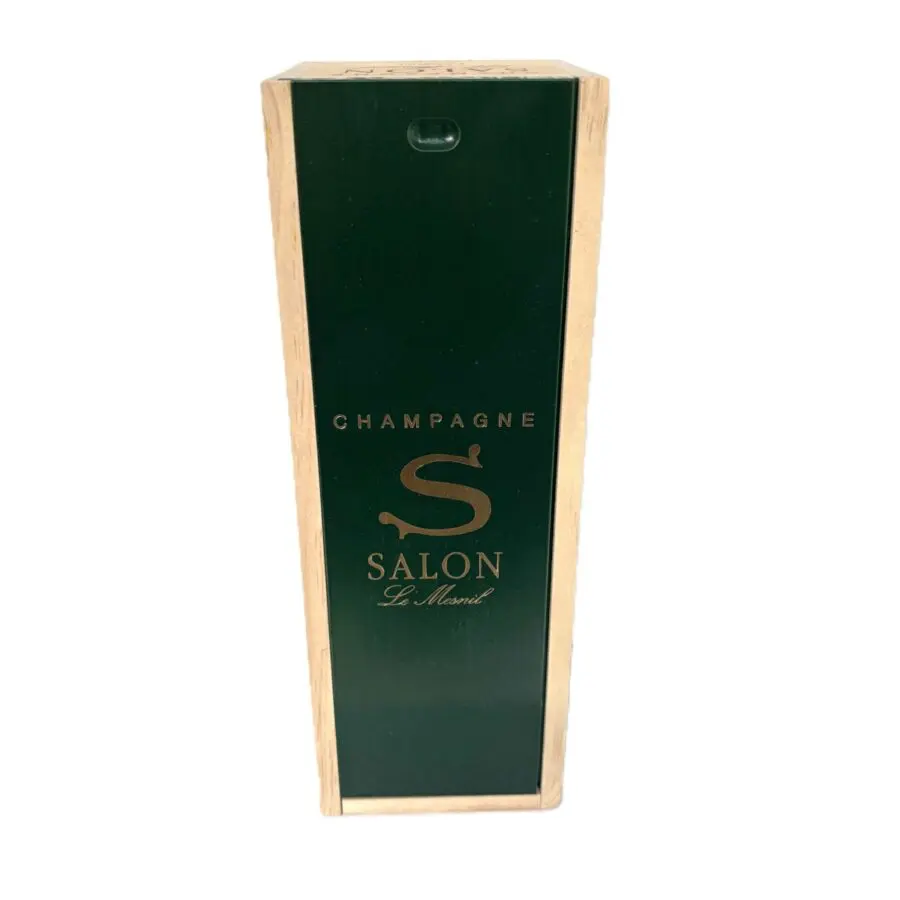
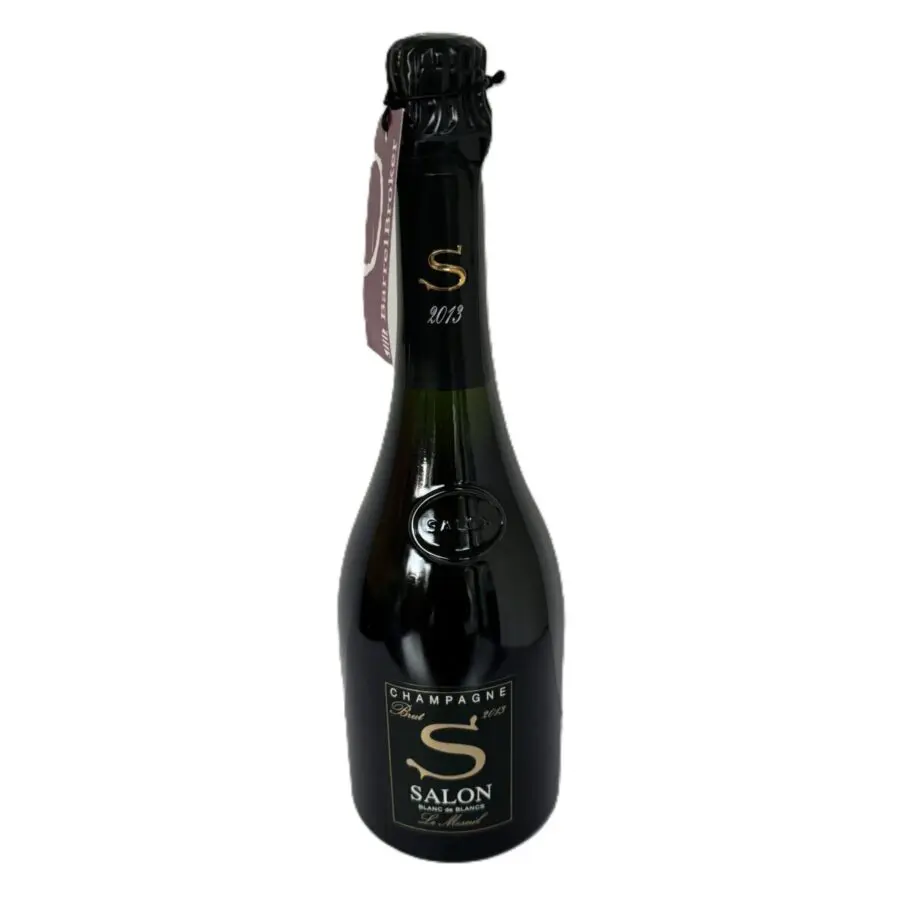
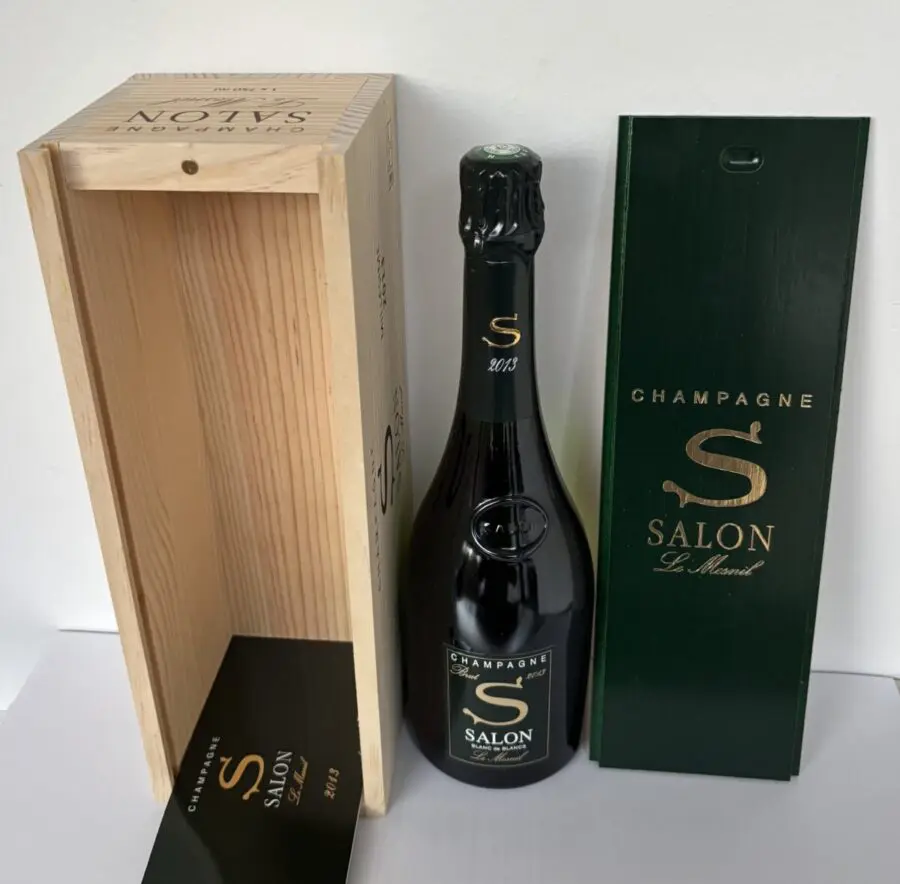
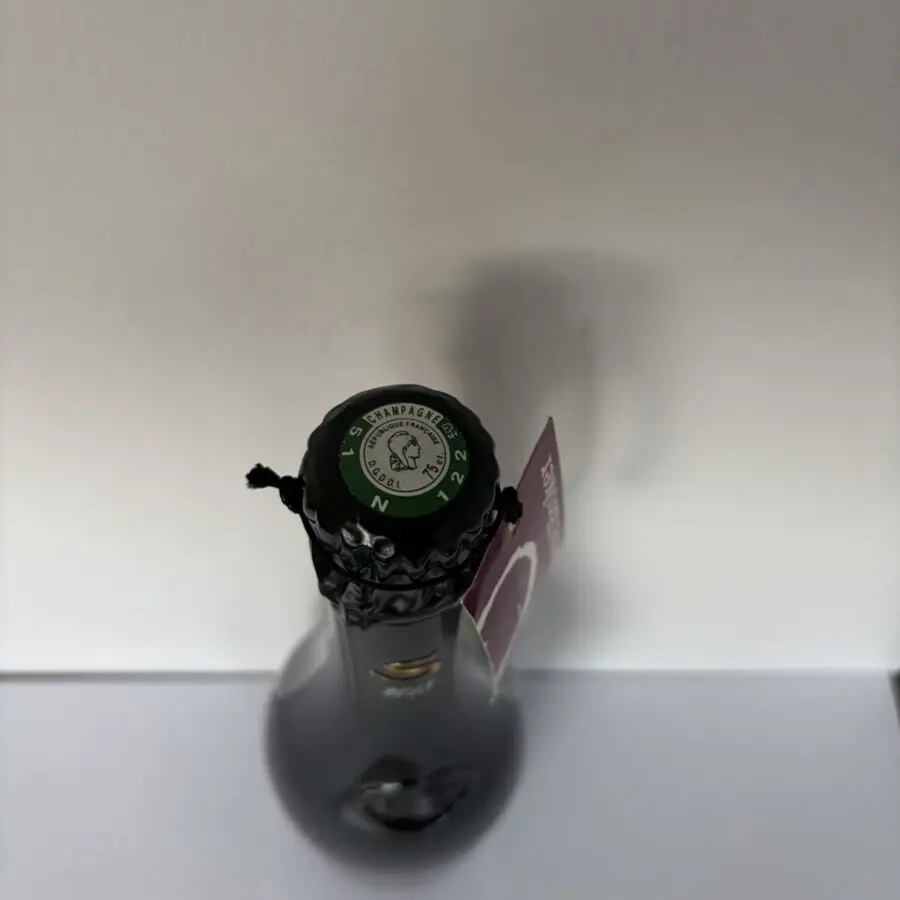
BB - SALON - 2013
2013
750ml
12,5%
SALON Cuvee ‘S’ Le Mesnil Blanc de Blancs Brut 2013
Category: Sparkling wine from Champagne
Chateau: Salon
Extra information: OWC. Bottle in original wooden case.
Region/Appellation: Champagne
Country hierarchy: Champagne
Good investment: Yes
Robert Parker rating: 97/100
0% VAT: Duty paid bottle (margin scheme)
All our bottles are stored elsewhere in a specialized and conditioned warehouse to guarantee the quality of our products.
This item is sold by a private collector through the BarrelBroker Marketplace. Price excludes VAT.
Availability: 1 in stock
in Vat: - 1,150.00€
ex Vat: - 1,150.00€
Availability: 1 in stock
Ask ShopAssist
The 2013 Brut Blanc de Blancs Le Mesnil continues its ascent and, even with just a couple of extra years in bottle, is already revealing different facets, expressing itself from the glass with aromas of citrus oil, white flowers, fresh hazelnut and freshly baked bread, mingled with marine inflections and a faint hint of mango. On the palate, it is full-bodied, ample and concentrated, underpinned by ripe yet racy acidity, animated by a pinpoint mousse and concluding with a resonant, chalky finish. While not fundamentally different, it is slightly tauter and more incisive in the context of the 2015; yet it possesses no austerity and will hardly disappoint those who choose to open a bottle in the mid-term. That said, it is undeniable that it will continue to gain depth with further aging, with no risk of deterioration.
Originally conceived as a private label for personal consumption by its founder, Eugène-Aimé Salon, this Champagne house was revolutionary in its concept: it produced Champagne from a single grape variety, a single village and a single vintage (though not every year) at a time when the region’s wines were typically blends in every sense. Salon was a contradiction. Today, Champagne has changed; single-village and single-vineyard bottlings are common, and there are options vinified in steel as well as wood, almost always bottled with minimal dosage. Despite this, it remains one of the region’s most coveted wines and, in certain circles, a reference point for the Côte de Blancs.
Acquired by Laurent-Perrier in 1988, Salon now enjoys a close relationship with neighboring Maison Delamotte, though their styles are quite distinctive. Delamotte’s creamier, more charming aesthetic contrasts with Salon’s brighter, more austere profile, although this seems to have softened in recent releases—notably the trio of 2012, 2013 and 2015—which are more friendly from the start. Grapes are sourced from Salon’s own one-hectare “garden” in Le Mesnil (which produces just 10% of their needs), complemented by fruit selected from 19 other sites in the village, many of which are farmed by the house’s team through long-standing relationships with the suppliers. The Salon team also determines the harvest dates. Visualizing Le Mesnil, most of their vineyards are located around the church and face southwest. Since 2005, the wines have been made by Michel Fauconnet, who served as cellar master for both houses until Olivier Vigneron succeeded him in 2025. Contrary to popular belief, Salon—like Delamotte—has been produced with full malolactic fermentation for at least the past four decades, if not longer. After fermentation in stainless steel, the wines spend around a decade on the lees before the first disgorgement. Since 1996, Salon has held back some wines for later disgorgement. Production, amounting to some 62,000 bottles in a favorable vintage, remains modest when set against the house’s disproportionate celebrity.
by Kristaps Karklins, March, 2026 for Wine Advocate
2013 is a cool, late-ripening vintage in Champagne, defined by an October harvest in cool but sunny conditions. With a dosage of 5.5 grams per liter, the 2013 Brut Blanc de Blancs Le Mesnil possesses a complex, fruity bouquet mingling aromas of orchard fruit with notions of lemon oil, exotic fruits, spring flowers, almond and hints of menthol and buttery pastry. Full-bodied, rich and dense, with lively acids, it’s more complex and incisive than the 2002 and exhibits similar power to the 2012 at this early stage. Despite what was a challenging growing season for some producers, this is a superb Salon with a long, resonant finish.
Salon’s just-released 2013 Blanc de Blancs derives from a challenging growing season that is emerging, at least with respect to the region’s top cuvées, as one of the most underestimated vintages of the last 15 years. After a cold winter, budbreak was relatively late. The weather was rainy throughout the spring, followed by hail episodes in the Côte des Bar, in Vallée de la Marne and in Côte des Blancs, notably in Epernay. In mid-July, the weather turned hot, sunny and dry until early September. Unfortunately, the rains returned until the end of the month, causing damage and precipitating a virulent attack of gray rot (botrytis) in some locations. Harvest took place at the beginning of October. The houses that managed to contain the attacks of gray rot and to pick the grapes during the mild days of October succeeded in making excellent wines with a classic, chiseled profile that has become only too rare in the interim.
by Yohan Castaing, June, 2023 for Wine Advocate
Be the first to review “SALON Cuvee ‘S’ Le Mesnil Blanc de Blancs Brut 2013” Cancel reply
You may also like
Related products
-
2022
HOSPICES DE BEAUNE PREMIER CRU CUVEE BRUNET 2022
in Vat: - 750.00€
ex Vat: - 750.00€
Add to cart -
1992
DOMAINE DE LA ROMANEE-CONTI Romanee-Conti Grand Cru 1992
in Vat: - 13,500.00€
ex Vat: - 13,500.00€
Add to cart



Reviews
There are no reviews yet.